Quick answer
The typical order of music in an Irish church wedding ceremony runs: processional/entrance, opening hymn, responsorial psalm, gospel acclamation, offertory, communion/reflection music, signing of the register, and recessional/exit.
Not every slot is fixed. Catholic and Church of Ireland ceremonies vary slightly, some parts may be omitted or sung by the priest/celebrant, and individual churches set their own rules — so confirm your running order with your celebrant before booking.
Best next step: match a musician to each moment, then browse by musician category or county.
Who this is for
Engaged and wedding-planning couples who want to understand exactly where music fits into a church wedding ceremony in Ireland, moment by moment.
What you will learn
The full running order for a Catholic or Church of Ireland ceremony, which parts are fixed by the liturgy, which are flexible, and which type of musician tends to suit each moment.
Understanding where music fits in during a wedding ceremony is very important. There are certain parts that are designated specifically for music. This guide will explain to engaged and wedding-planning couples where the music fits in, and arm you with the knowledge you need to plan the perfect ceremony.
We all know that music is a crucial part of any church wedding ceremony. Music sets the tone, the atmosphere, and guides the congregation on what to do throughout. It can be a wonderful way to make your ceremony special according to you and your partner's personalities. But where does music fit into a wedding ceremony? It's usually at certain designated times throughout, such as the entrance, opening hymn, and communion/reflection. But there are several instances where there's a choice whether or not to feature music, and many factors to consider, such as the order of your preferred music, what type of music, and the atmosphere you want to create. Read on to discover everything you need to know.
So, when should music play during a wedding ceremony? It can differ slightly between Catholic ceremonies and Protestant ceremonies, (although for the most part following a similar structure).
At a glance: the typical church wedding music order
Processional / Entrance
Opening hymn
Responsorial psalm (differs depending on the ceremony)
Gospel acclamation
Offertory
Communion / reflection music (Communion is optional depending on the type of service)
Signing of the register
Recessional / exit
In addition to this, there are other musical opportunities such as the inclusion of Holy Holy / Memorial Acclamation / Lamb of God. Not everything is fixed by the liturgy either, some parts of the ceremony may be omitted or sung by the priest/celebrant. Read on to discover everything you need to know about individual parts of the ceremony.
Planning your ceremony music?
Once you know your running order, the next step is comparing musicians who can cover the moments that matter most to you.
The Beginning: processional / entrance music
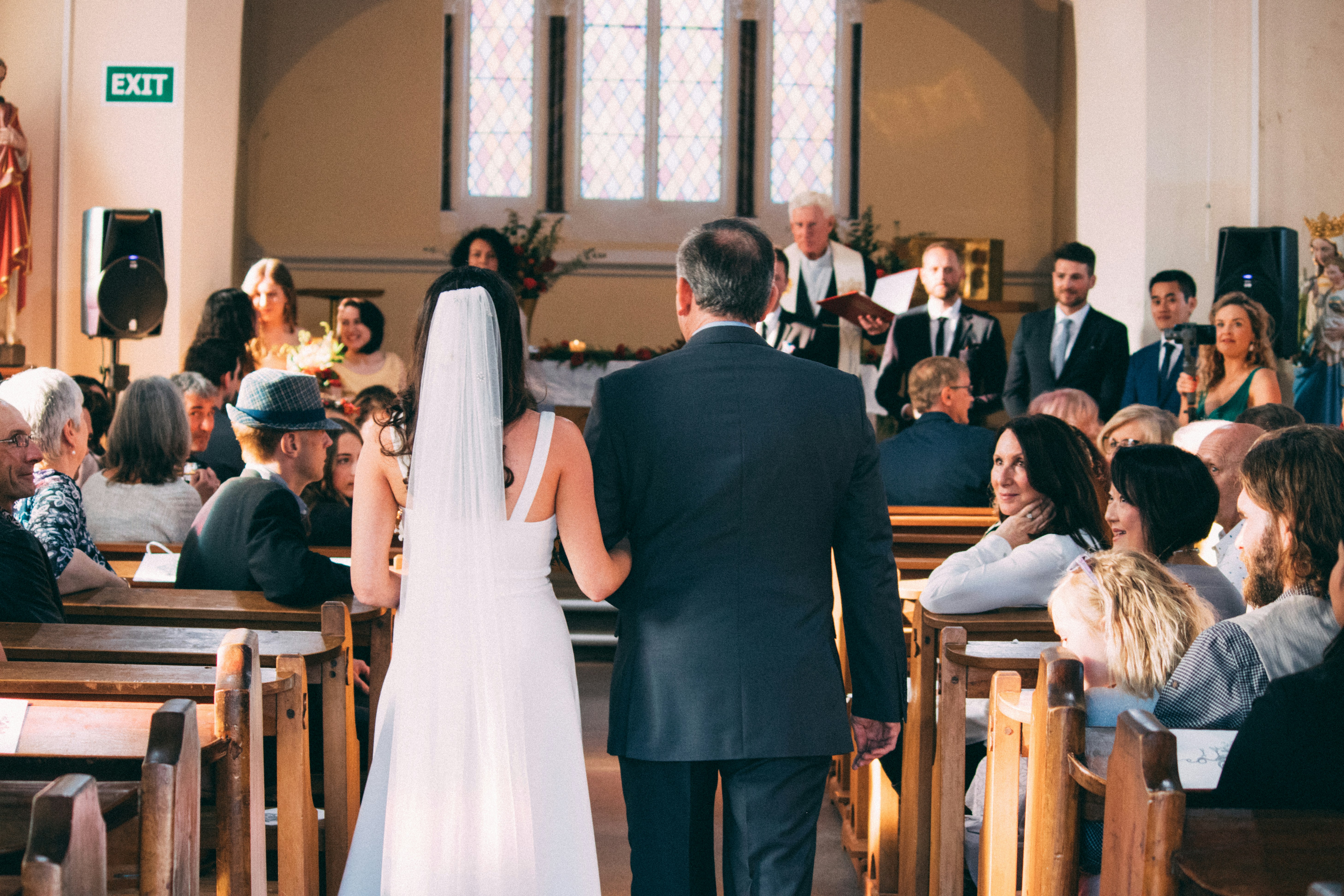
This is where the bride or groom enters, with their respective parties. It's a majestic, exciting moment, filled with anticipation.
Common song choices are classical music, hymns, or modern ballads (if the church allows). This is a truly euphoric moment that your loved ones will remember forever, so it's important to make it an impactful one. Although many churches will require religious music here, it's one of the parts of the ceremony where you're most likely to be permitted to use non religious music. See this article for some inspiration for great entrance music.
The Opening Hymn
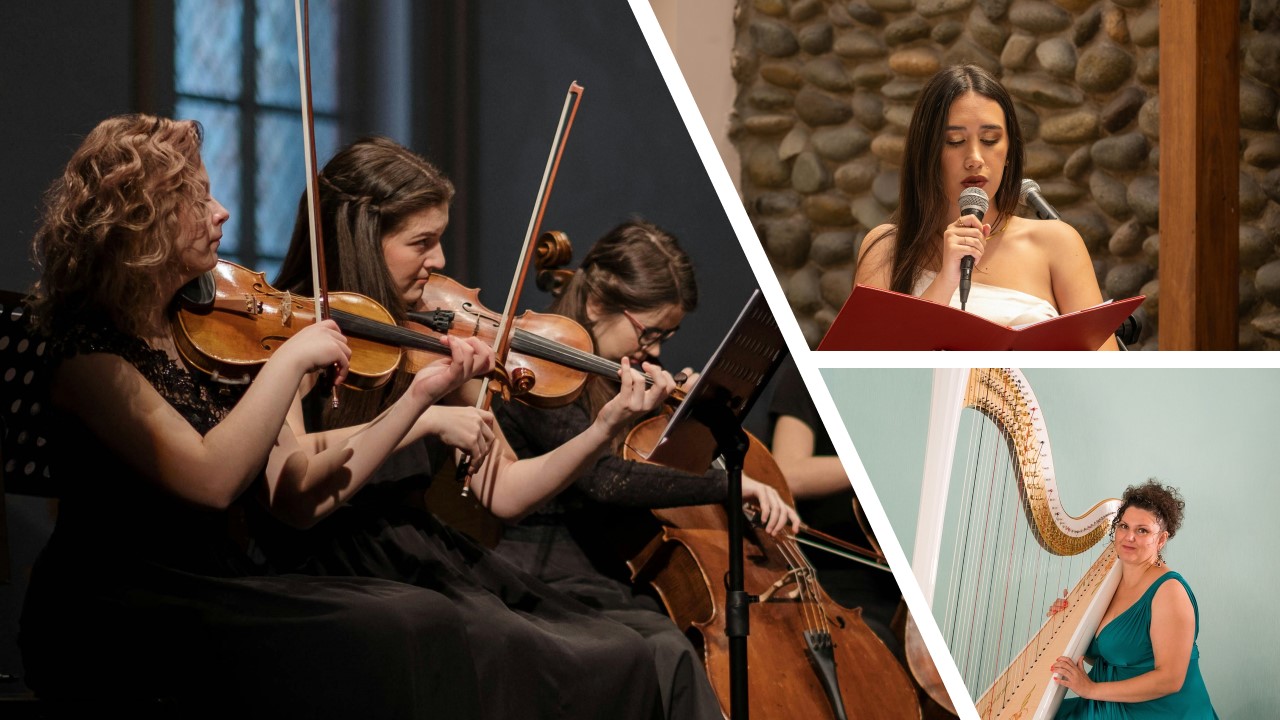
Once the processional is complete and guests and parties are seated, the ceremony will usually start with an opening hymn. This takes place early on in the service, and in a Catholic Mass is often part of the liturgy.
It usually isn't very long and serves as a transitional piece to begin the ceremony. If it's a well-known hymn, you can sometimes integrate congregational singing into this part of the service.
Responsorial Psalm
The next piece of music in the church wedding ceremony order is usually a responsorial psalm during the readings. It's a liturgical element specific to Catholic weddings, not Church of Ireland weddings. It's also optional, as it can also be spoken by the priest, but is often sung. It's also a good opportunity to get the general congregation involved in the response.
Gospel Acclamation
The Gospel Acclamation is a fixed part of the liturgy and so is usually a set piece of religious music without much flexibility. This being said, there is some flexibility over the wording, so make sure to consult with your celebrant.
Offertory
Although offertory music is part of the liturgy, there is a lot of flexibility around what style of music you would like it to be. There is potential for a reflective/quieter hymn, an upbeat hymn, or a peaceful instrumental piece. This is a brilliant time to let your ceremony musician's strengths shine.
The communion / reflection
This is the music that plays while Communion is taking place. It's usually gentle, reflective, and atmospheric, and is generally a piece of religious music.
This music can include vocals or be instrumental. String instruments or full string quartets often work particularly well in this context.
Please note that some couples opt for a Catholic wedding ceremony without a full mass, which omits the Eucharist.
Signing of the register
The next part of the ceremony you will need music for is the signing of the register. This is another quiet moment where the music should be reflective, but also joyful.
There is time for slightly longer musical pieces as the paperwork is completed. This can be an excellent time for an instrumental cover of a modern love song, if your church allows it.
The recessional / exit
The final piece of music in the church wedding music order is the recessional/exit music. This is usually joyful or upbeat music as the couple leaves — music that celebrates their union.
There is also room for personalisation here. Some choose more traditional options such as Mendelssohn's Wedding March, while others choose instrumentals of modern pop songs or Irish traditional music.
What type of musician shines where?
Of course, finding the perfect musician for your ceremony is a deeply personal choice and depends on many different factors, but we hope that this quick guide to what musicians may suit certain parts best might be of assistance in your choice.
| Part of the ceremony | Why this musician type shines here | Browse |
|---|---|---|
| Processional / Entrance | Often a solo singer works well in this context as they will be able to give a stripped back performance, meaning that attention will be on the bride and groom. | Female singers · Male singers |
| Opening hymn | A choir or quartet lends itself well to this part of the ceremony. | String quartets · Choirs |
| Responsorial psalm | A solo singer with a violinist or pianist sounds beautiful here, as they'll be able to enunciate the response clearly for the congregation. | Violinists · Pianists · Singer pianists |
| Gospel acclamation | A choir or group of singers would be beautiful for this part of the ceremony. | Choirs · Vocal groups |
| Offertory | A trad music or a violinist would shine here, creating a beautiful instrumental. | Trad bands · Violinists |
| Communion / reflection music | An instrumental pianist would be truly beautiful here. | Pianists · String quartets |
| Signing of the register | A string quartet would really emphasise this important moment, making it extra moving for your guests. | String quartets |
| Recessional / exit | A solo singer or duo would really emphasise this joyful moment. | Female singers · Male singers · Vocal groups |
Processional / Entrance
Often a solo singer works well in this context as they will be able to give a stripped back performance, meaning that attention will be on the bride and groom.
Browse: Female singers · Male singers
Opening hymn
A choir or quartet lends itself well to this part of the ceremony.
Browse: String quartets · Choirs
Responsorial psalm
A solo singer with a violinist or pianist sounds beautiful here, as they'll be able to enunciate the response clearly for the congregation.
Browse: Violinists · Pianists · Singer pianists
Gospel acclamation
A choir or group of singers would be beautiful for this part of the ceremony.
Browse: Choirs · Vocal groups
Offertory
A trad music or a violinist would shine here, creating a beautiful instrumental.
Browse: Trad bands · Violinists
Communion / reflection music
An instrumental pianist would be truly beautiful here.
Browse: Pianists · String quartets
Signing of the register
A string quartet would really emphasise this important moment, making it extra moving for your guests.
Browse: String quartets
Recessional / exit
A solo singer or duo would really emphasise this joyful moment.
Browse: Female singers · Male singers · Vocal groups
Takeaway for couples
Use this as a starting point, then check each musician's samples so the style matches the mood you want for that particular moment.
Takeaway for musicians
If you cover several of these moments — entrance, offertory and signing, for example — make that clear on your profile so couples can book you for the full ceremony rather than a single slot.
Church rules: What varies from one church to another
There are of course differences between Catholic and Protestant/Church of Ireland services, and between church ceremonies and other types of ceremonies. Catholic Mass often includes more liturgical slots for music.
In addition to this, individual churches may have individual rules. Certain churches will permit non religious music in certain spaces, while others will not. Some churches may prefer to have parts such as the responsible psalm be spoken.
Speak to your celebrant or church to confirm what is permitted ahead of planning.
Other things to note
- Make sure to utilise your musician's skill. They can guide you through the correct order of music, the timeline to work to, and anything else you need to know. The musicians listed on ChurchMusic.ie are experienced and happy to guide you — they may even be familiar with your chosen church. Find some fantastic, experienced Irish ceremony musicians here.
- Try to find a balance between personal preferences and church rules. It's your day, but some churches have guidelines they cannot make exceptions for.
- Ensure you or your musician have a backup plan in case of illness or an issue on the day. Many experienced musicians have contingency plans, but it's worth confirming. Also bring physical copies of sheet music in case technology fails.
Why trust this guide?
The information presented here was gathered by ChurchMusic.ie, based on experience and guidelines for Irish weddings. We are experts in Irish ceremony music, with over 100 Irish musicians trusting us to advertise their services. ChurchMusic.ie was designed with the intention of making sourcing a skilled and experienced ceremony musician as easy as possible for you. You can browse musicians in different counties, styles and more — there truly is something for everyone.
Bottom line
The church wedding music order has fixed points and flexible ones. Knowing the difference — and confirming the flexible parts with your celebrant early — makes it far easier to brief a musician and get the ceremony you want.
FAQs
What is the typical order of music in a Catholic church wedding ceremony?
The usual structure is: Processional / Entrance, Opening Hymn, Responsorial Psalm, Gospel acclamation, Offertory, Communion / Reflection Music, Signing of the Register, Recessional / Exit.
Is the music different for Catholic and Church of Ireland ceremonies?
It can differ slightly. Catholic Mass often has more liturgical slots for music than Church of Ireland services. Always confirm what is allowed with your celebrant or church.
Can the Responsorial Psalm be spoken instead of sung?
Yes, discuss this with your celebrant if it's your preference.
What parts of a Nuptial Mass can be sung?
For the most part all of the above discussed parts can be sung, but discuss with your particular church in case they have different preferences.
Do I need music for the Offertory at a church wedding?
You don't need music for this part of a ceremony per se, but it is a beautiful moment to utilise the emotion of music in your wedding.
Can I use modern songs in a church ceremony/during the Signing of the Register?
Sometimes, but it depends on the church. Many churches have rules about non-religious songs. Ask in advance and work with your musician to choose appropriate options.
Who can help me choose the right music for each part of the ceremony?
Your musician can guide you on music order, timing, and what works best in your church. It also helps to check with your celebrant on what is permitted in the service.
Find your ceremony musician today
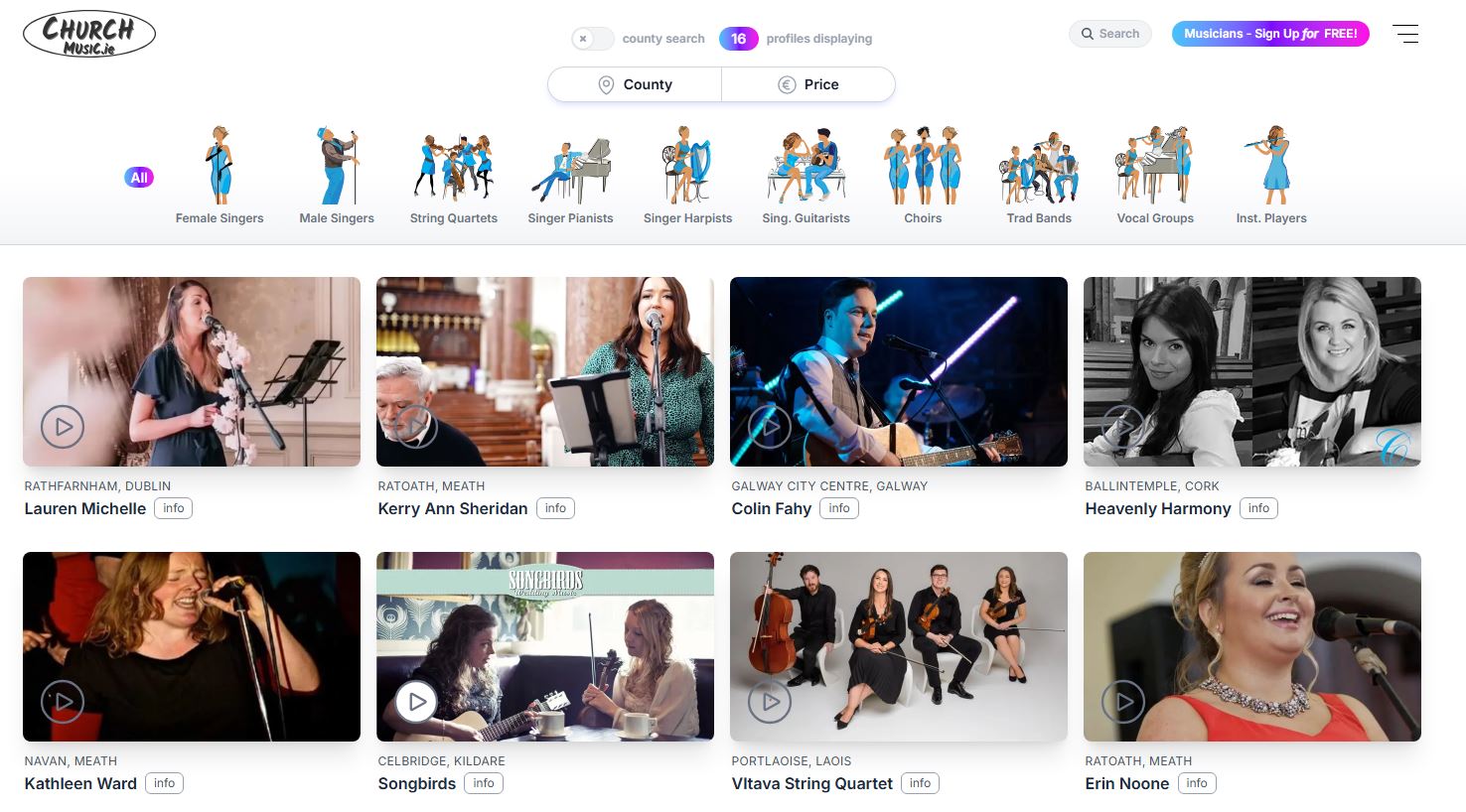
Browse experienced wedding ceremony musicians by instrument, voice type and county, then send enquiries directly to musicians who match your date, location and ceremony style.
Browse by musician type
Next steps
Now you have everything you need to plan the order and specificities of your wedding ceremony music, why not check out some of our other articles? And make sure to visit ChurchMusic.ie to find your perfect ceremony musician today!